Showing posts with label Film 2011. Show all posts

Monday, 3 October 2011

The Phantom of the Opera at the Royal Albert Hall

Last night, Andrew Lloyd Webber’s The Phantom of the Opera, was broadcast live to cinemas across the world as part of its 25th anniversary celebrations. Specially staged in London’s Royal Albert Hall, this incredible event brought people out in their droves to see the most anticipated theatrical event of the year. (The screening I attended was a complete sell out). The atmosphere in the hall must have been electrifying, yet the cinema streams had their advantages. Attendees got to see everything in high definition, up close and personal, and came away having seen something better than Joel Schumacher’s 2004, Hollywood version starring Gerard Butler and Emmy Rossum. The credits began to roll, and I stepped out of our screen thinking I had been there in person. The Phantom of the Opera at the Royal Albert Hall was something special, and something all fans, or as the die-hards call themselves, ‘phans’, should see.

The stream kicked off with a trailer for the Phantom sequel, Love Never Dies. As much as I like the London version, the quick flashes we saw of the Melbourne production were fantastic, especially on the big screen. (And by the way, ‘Beneath A Moonless Sky’ sounds epic in surround sound). After a quick voiceover announcing the show would soon be available to purchase on DVD and Blu-Ray after a stint in cinemas, the stream cut to another trailer advertising the recordings of the Royal Albert Hall production and a new Phantom tour in 2012. Andrew Lloyd Webber never misses a trick; god knows how many people were viewing this stream across the world! After a short documentary detailing the genesis of Phantom, which lasted around twenty minutes, a title card emerged announcing that the show would begin ‘in five minutes.’ Cue last minute toilet trips for everybody. The live feed eventually flickered to life, and we were greeted with a stunning view of the Royal Albert Hall, which looks considerably bigger on screen than it is in real life.  

The show began. Immediately, it became clear that those who had opted for the cinema screening had the best seats to the show. The close-up shots of the actors made this look more like a film, yet somehow, it never lost the magic that makes Phantom the theatrical experience that it is. The emotion, the clarity, the sheer brilliance of everybody’s acting ability was visible for all to see. I can’t imagine what it was like for those opposite the stage, across the other side of the Albert Hall. It’s easy to be carried away by the magnitude of such an event. Yes, it has the flashy special effects and the pyrotechnics, yet its brilliance lies in the two main actors: Ramin Karimloo as the Phantom and Sierra Boggess as his obsession, Christine. Their performances were nothing short of breathtaking. Our screening came with German subtitles, a potential annoyance, yet they were soon forgotten and I found myself so immersed in what was happening on screen that there were moments when I would question whether the subtitles had appeared on screen for a scene that had just occurred. 

Karimloo joins the cast once again as The Phantom.
Whoever follows Karimloo’s Phantom is going to have a tough job. I was lucky enough to see him twice in the title role at Her Majesty’s where the original show has been playing for 25 years, and saw him twice in Love Never Dies at the Adelphi before it (criminally) shut. How wrong I was to presume that Karimloo’s performance would be a ‘rehash’ of his earlier days as the iconic character. Karimloo brought an entirely new interpretation to the role, a renewed energy that really built upon the third dimensional aspects of such a character. The tears on his face in moments of silence, the anguish in his eyes, the yearning in his body language: these subtle yet powerful moments could only be appreciated by those in cinemas and the first few rows of the Albert Hall. Obviously I cannot comment on the show from the perspective of those ‘in the Gods’ as I was not there, yet I hope they can appreciate Karimloo’s achievements. The final lair sequence from ‘Down Once More…’ onwards can be described as nothing short of devastating. You could have heard a pin drop in our cinema. The idea of a live stage stream to cinemas could have resulted in a disaster, but it was anything but, something which bodes very well for the forthcoming Love Never Dies DVD. 

Boggess and Karimloo in 'Love Never Dies.'
Boggess, in her role as Christine was also phenomenal. Karimloo and Boggess have real chemistry, something which has been allowed to develop through Love Never Dies. It pays off here. The graveyard sequence where Christine sings ‘Wishing You Were Somehow Here Again’ was chilling, and rightfully earned Boggess a rapturous round of applause from the audience at the Albert Hall, and I imagine, right across the world. Hadley Fraser as Raoul was also brilliantly cast to complete the perfect trio for such a spectacle. 

The staging, as was to be expected, was pretty simple, relying heavily on projections, with the odd prop or two, yet this did not detract at all from the experience. In fact, it probably worked better than it would have done had every prop from the original production made an appearance. The boat sequence was played out almost exactly how it is in the original, and the chandelier, although already raised, was revealed in spectacular fashion. The projections, in a way, enhanced the show. For example, Christine reads a letter from the Phantom and we see him writing it, on the screen in the background. The Phantom’s abrupt appearance at the end of the 'Masquerade' sequence is enlarged by the screens, and as such, impose a genuine threat upon all of us. His skull mask was pretty creepy! My favourite use of projections was at the end of ‘Think Of Me.’ In the original, Christine turns her back to us and faces back stage, as if she is facing the audience of the Paris Opera House. Here, she does the same thing, although the audience at the Albert Hall was projected onto the screens to make it look as if she was singing to them, before the ‘back stage scene.' It was a nice touch, one in which the audience was physically brought into the show itself.

Favourite scenes for me had to include ‘The Music of the Night’, the boat sequence, the finale from ‘Point Of No Return’ and ‘Masquerade.’ ‘Masquerade’ is a big number anyway, but nothing compares to three, full companies singing it and blasting off the roof in the process. It’s nothing short of epic, especially against the orchestra which stretched the length of the stage. Perhaps this was one let down of being in the cinema. There was so much going on in the ‘Masquerade’ sequence that the cameras didn’t know where to look. A series of quick cuts were frustrating at times.

The only problem we had with our stream was a short break where the signal dropped. In the mean time, we received quick flashes of ‘The Gospel Channel’ (much to the humour of the audience) as the cinema tried to regain the picture, which they did within a minute, and thankfully, it was during a part where no one was really bothered. (the ‘Don Juan’ rehearsal scene, if I’m not mistaken).

The Phantom of the Opera at the Royal Albert Hall really was a phenomenal event and one which can be watched over and over again. Phantom has survived the West End for 25 years now and shows no sign of abating. The most successful piece of entertainment ever keeps going strong and it’s no wonder why. Andrew Lloyd Webber’s score has entranced generations of people, and will, I’m sure, entrance generations to come.

You can purchase The Phantom of the Opera at the Royal Albert Hall on DVD here and Blu-Ray here. The CD recording is also available here.

You can purchase the Melbourne production of Love Never Dies on DVD here and Blu-Ray here.


Friday, 9 September 2011

The Troll Hunter

THIS POST CONTAINS MAJOR SPOILERS

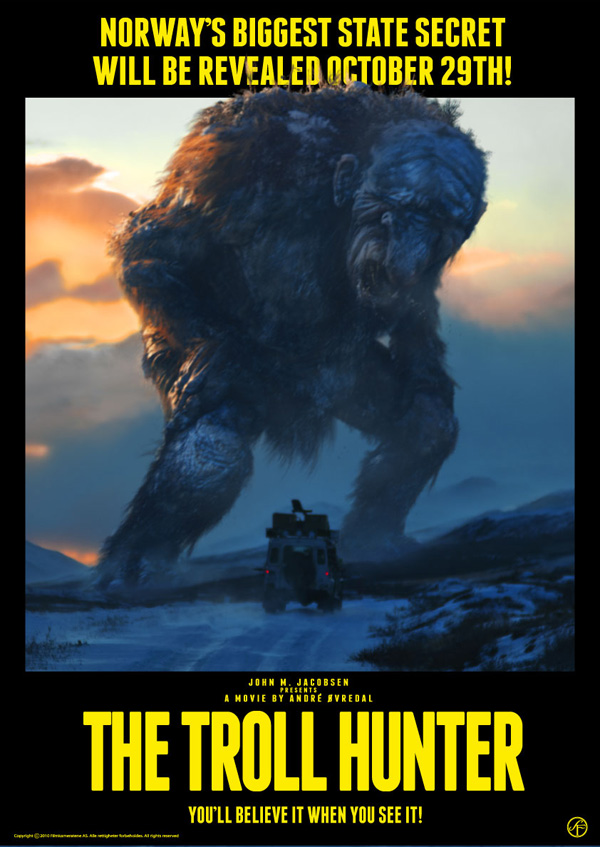
Another ‘found footage’ film has made it onto our cinema screens this week. Troll Hunter, a Norwegian ‘mockumentary,’ written and directed by André Øvredal, follows a group of students who set out to make a documentary about a supposed Bear poacher, Hans. As the trio secretly follow and film Hans, they uncover a truth more shocking than anyone could ever imagine. Hans is a hunter, working for the Norwegian Government, killing trolls that have escaped their ‘territory.’ Unlike Apollo 18, this film treats its ‘found footage’ style as an asset. Surprisingly, Øvredal has crafted a little gem here, and while it may not achieve mainstream success, it will most certainly earn a cult following and rightly deserves it status as one of the better films of summer 2011.

Troll Hunter is not a horror and it doesn’t pretend to be. Part drama, part comedy, part social satire, Hunter works because of its tongue-in-cheek attitude towards itself. As a piece of film, it shines due to its ability to never take itself too seriously. Maybe this is what sets it apart from its Hollywood counterparts. There’s a sense of uniqueness here, a sense of foreign originality which is all too lacking in film these days. Yes, we are indulged with beautiful shots of the Norwegian landscape, but its genius stems from more than its patriotic, loving scenes of its homeland. Hollywood conformities are ignored and whilst the ending is predictable because of the way it is filmed, the rest is unpredictable, thrilling, and at times, down right menacing.  

Considering Øvredal shot Troll Hunter on a challenging budget of US $3.5 million, the special effects are of the highest standard. The creature designs in this remind me of Guillermo del Toro’s work on his own masterpiece, Pan’s Labyrinth. Combined with sweeping shots of Norway’s spectacular scenery and Hunter contains stunning cinematography that really adds a sense of scale to events. Although I was quite critical of the style in my previous review of Apollo 18, the ‘found footage’ aspect really gives the film a raw, authentic feel and is an excellent example of how this doesn't only have to be employed in horror films.

Creature designs reminscent of Guillermo del Toro's work.
Øvredal has fun with the creature’s ‘look.’ He is not concerned with how scary they seem. Indeed, the physicality of these monsters border on the humorous. Øvredal focuses on an ‘event’ in the film and its repercussions, rather than how he expects his audience to feel. This, in a way, adds to the realism of the picture and helps with the development of its characters. Jumping at times from the hilarious, to the tense, to the absurd, it all somehow works. Keep an eye out for the slight pokes at Hollywood blockbusters: Hans attempts to lure one of the trolls out of hiding using a sheep as bait, an obvious throwback to the infamous scene in Steven Spielberg’s Jurassic Park, whilst a sequence where our heroes are fleeing an attack in their car is almost identical to the Tyrannosaurus Rex chase. Moments like this, with an underlying subtle humour, is where Troll Hunter excels.

I suppose UK and US audiences cannot fully appreciate the more ‘knowledgeable’ parts of the film’s humour. Hans is played by Otto Jespersen, a famous (and apparently controversial) Norwegian comedian who may be largely unknown to international viewers. The other main actors seem comfortable in their roles although a largely improvised script has its limitations and issues. When one of their team dies, they do not seem as upset as expected and within minutes they already have a new member joining them for their expedition. For a film that ‘pampers’ its realism, this seems a little disjointed compared to other moments of brilliance.

It may be slow in places, but this post-modern take on local folklore will certainly leave you feeling both satisfied and shocked. 106 minutes may be a little too long for this kind of film and the climax seems a little rushed, but its strengths overshadow any criticisms that it draws. It’s wry, it’s clever and most importantly, it’s fun. Go and see it before the inevitable Hollywood remake is released.

My Rating: * * * *

While I’m here, I must criticise the UK trailer. If you’ve seen it, ignore it. What the distributors of Troll Hunter were thinking when they put out such a ridiculous, cheap, tacky advertisement, I don’t know. In an attempt to make the film appeal to a wider audience, they’ve made it look like some ‘zany’ comedy. Isn’t it better to advertise a film on its own merits rather than trying to mould it into something it’s not? 

The official trailer you SHOULD watch!


The awful UK trailer:


Thursday, 8 September 2011

Apollo 18

THIS POST CONTAINS MAJOR SPOILERS.
 
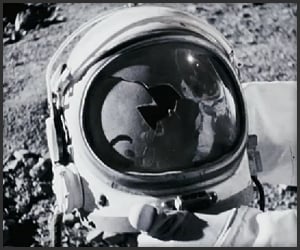
Apollo 18 is frustrating. Extremely frustrating in fact. Gonzalo López-Gallego’s ‘found footage horror’ has the potential to be something brilliant, yet in its desire to be something that it’s not, it fails spectacularly. ‘Found footage’ has been done to death, and in my opinion, The Blair Witch Project is the best of the lot, with REC coming a close second. Apollo 18, however, offers something unique, something that in hindsight, could refresh the genre for millions more to enjoy. Its strength lies in its setting: the moon. Immediately it is obvious that these characters will have to endure loneliness, isolation and segregation from humanity. If the film even bothered to tap into these simplistic yet raw themes, it would be an extreme improvement. Unfortunately, everything you want to happen is ignored and what is left is a thin storyline, an attempted horror and plot holes the size of moon craters. (Couldn’t resist. Sorry.)

The premise of the film is actually fantastic, which makes the finished outcome all the more disappointing. Film footage, uploaded to www.lunartruth.com, reveals that the cancelled Apollo 18 mission did in fact launch but never returned, which is why we never went back to the moon. The film, which acts as the material uploaded to the net, uncovers the secrets that NASA has been holding back for years. It’s all very intriguing. The problem lies with the film itself. Multiple sub-plots are stronger than the main story thread, ignored for the most part and only brought back to our attention when they’re conveniently needed. Inextricable problems are suddenly solved without a second thought and the film relies a little too much on the ‘Deus Ex Machina’ plot device to end the character’s dilemmas. It’s dumb and it’s stupid and a great disappointment.

Russians on the moon: One of the better storylines.


Visually, the film is stunning. López-Gallego should congratulate himself on his recreation, but it’s not enough for us to ignore the major flaws that exist here. The film takes an extremely long time to get going, too long for us to feel as if it’s worth investing anything here. When it does, things get interesting. Our main characters find an abandoned Russian landing module on the moon, the inside trashed and covered in blood. This is where Apollo 18 should have focused its energy; as the astronauts communicate with Earth in an attempt to uncover the truth, there is a genuine sense of foreboding and uneasiness. Not surprisingly, this disturbing atmosphere, so expertly crafted, only exists during the more realistic parts of the film, only to dissolve once the idea of an alien creature is introduced. Unfortunately, the Russian story is relegated to a subplot and left forgotten until the very end and there’s no concrete explanation as to why they are actually there. Reasons are hinted at, but for something that is given such prominence at the beginning of the film, the pay off is weak. I’m sure it would be fair to say that Apollo 18 would work far better as a conspiracy thriller. If López-Gallego could think of a legitimate reason as to why the Russians were really there and what happened to them, then this would most likely be something excellent. After all, why does the ‘found footage’ genre always have to revolve around the horrific?

Logic and realism are sacrificed to make a ‘horror’ film that offers nothing new than the one before it. When the good old ‘alien passing outside the window’ scene arrives, it turns out creatures the size of small rocks possess massive shadows that cover the entire lunar landing module. López-Gallego and his team have fallen victim to the horror clichés that dominate the genre these days. This brings me to the biggest plot hole of all, as well as the biggest spoiler. If you’re still planning on watching, I would recommend that you stop reading now and come back later.

All three astronauts die. Any footage that exists is either destroyed in space or left on the moon. We are told at the beginning of the film that, ‘we never went back.’ How, then, did this footage ever get found? I feel as if Dimension Films are really scraping the barrel when their entire marketing campaign (found footage from the moon!) is a sheer impossibility. Are we really meant to believe that this all just found its way back down to Earth? Even an unrealistic explanation would be better than nothing. Ignorance is rife here and it shows.

The casting of three unknowns is a good decision, although their performances are not the best I’ve ever seen. Warren Christie as Astronaut Ben Anderson has the best scenes out of the trio, and he makes the most of the climactic, ‘You’re not coming back to Earth’ scenario. I would be surprised if anyone still cared about these characters by the time their ‘official’ fates are revealed. Apollo 18 is only ninety minutes, yet a long, drawn out beginning makes it feel much longer. As the credits roll over a sombre, piano rendition of ‘We Three Kings’, you will already have pulled apart much of the film’s plot lines. You may also wish you’d spent your £5 on something else. This is one that is destined for the bargain bin when released on DVD and Blu-Ray. No doubt some more footage will have been 'found' by then to bulk out the special features.

Apollo 18 is an extremely predictable story. There’s no substance, no cathartic value. If there weren’t hints of something better in the remnants of an awful horror, then maybe I wouldn’t be so disappointed. It is said that in space, no one can hear you scream. After watching Apollo 18, I don’t think anyone would care.

My Rating: * *


Saturday, 13 August 2011

Rise of the Planet of the Apes

THIS REVIEW CONTAINS MINOR SPOILERS

Andy Serkis recently stated in an interview that motion capture is like make-up. The actor acts and the visual effects are applied later. At first I was a little reluctant to embrace this view. Then I saw Serkis' performance in Rise of the Planet of the Apes, the latest ‘reboot’ to hit our cinema screens, brought to us from British director, Rupert Wyatt. Forget James Franco or Freida Pinto. Serkis is the star here and it’s time that motion capture was recognised as a legitimate form of acting. Surely Serkis will receive some sort of recognition for his performance. It is, quite frankly, the best use of motion capture that Weta Digital has ever put onto film, beating even that of James Cameron’s Avatar.

Serkis plays Caesar, an orphaned chimpanzee with enhanced intelligence, made possible through the testing of a genetically engineered retrovirus applied to his mother. As scientist Will Rodman (James Franco) battles to find a cure for Alzheimer’s disease, he becomes increasingly ignorant of the repercussions that his experiments are having on his test subjects. Soon, the battle for supremacy begins as Caesar leads the rebellion against humanity.

Apes is driven by character, saving its action for the third act. This, of course, is part of its brilliance. Caesar’s life is documented by Wyatt in documentary type style before unleashing the uprising that is teased throughout. Indeed, the title for the film was originally Caesar before Twentieth Century Fox changed it to be a recognisable instalment in the well known franchise. (The less said about Tim Burton’s remake the better).

Serkis is terrific as Caesar.
I cannot praise Serkis’ striking ability to bring an emotional, three dimensional depth to a character that is visually made up of CGI, enough. Serkis’ genius resides in his eyes. In essence, they betray his character’s emotion when compared to the misleading façade that Caesar attempts to demonstrate to his human counterparts. His confusion at his mistreatment, his yearning for the safe haven he has learned to call home, his thought process and hatred of his enemies is all portrayed through his eyes. It is an incredible performance, and once again I shall reiterate the need for motion capture to be recognised at some of the more prestigious award ceremonies. You only need to catch a glimpse of the trailer to see what I mean. Human antics are present within Caesar; interesting questions about the bonds between the animal and the human and the boundaries between them are posed whilst the ethics, the moral philosophy and the wrongs of animal testing are also hinted at. It is, however, only a slight hint. Wyatt stops short of plaguing us with the political messages that he could easily promote in a film like this.

Rise of the Planet of the Apes is a drama and not, I would argue, the action film that the premise implies. The tension builds, at times, to unbearable levels and the turning point, the game changer of the film, where Caesar embraces his Spartacus-esque position as the rebellion’s leader is a fantastic, shocking, gritty and raw moment. “Take your stinking paws off me, you damned dirty ape!” Tom Felton’s character screams at Caesar as the tables turn and the animals rise to dominance. “No!” Caesar shouts back, the first words spoken by the ape. This is drama at its best, executed perfectly and a nostalgic look back at the quote made famous by Charlton Heston in the original film. (I'm pretty sure the audience gasped here, such is the intensity). Many viewers looking for cheap thrills may prefer less time spent on Caesar’s hardships and more time dedicated to the action, most prominently the stunning final battle that takes place on the Golden Gate Bridge. Quite rightly, however, this is not the case.

James Franco puts in a disappointing performance.
The human cast is what prevents me from giving this film a perfect five stars. Franco has little to do in the final hour. We catch quick glimpses of him running around looking for his former chimp friend but his performance is disappointing, especially after his turn in Danny Boyle’s 127 Hours. Freida Pinto, last seen in Slumdog Millionaire (another Boyle film) is dull at best and brings nothing new to the table while Brian Cox just looks bewildered for the majority of his screen time. Tom Felton has a little too much Draco Malfoy in him for his performance to be taken seriously but in all honesty, it is hard to overshadow Serkis. Indeed, the 'ape only' scenes are some of the best that the film has to offer. John Lithgow, however, is heart breaking in his portrayal of a father afflicted with Alzheimer’s. Wyatt handles the subject tastefully and with sincerity. It is interesting that he includes the degradation of the human mind against the evolution of the ape’s intelligence. Symbolic? Yes. Gratuitous? No. Apes, at its core, deals with a son trying to save his father. It revolves around one man who attempts to achieve the impossible whilst trying to deal with the repercussions of his hubristic nature.

I hoped for a shot of a post uprising world yet Wyatt does not humour us with such events. This is only the rise of the apes and not the complete take over. One of the last images of man and ape standing side by side is an iconic one, and leaves the viewer to image what will happen next. Yes, the original films tell us what will occur in the far future, yet I cannot help but think that there is a missing chapter in between this prequel and the first film of the classic saga that will link all of the chapters in a definitive way. If there isn’t, it’s one hell of a jump, even with the scene that plays over the end credits, of which I shall not spoil.
  
Many have raved about this film. Some of the praise I find a little excessive. This isn’t a classic but along with Super 8, Rise of the Planet of the Apes is one of the better summer blockbusters to hit our screens this year. Terrifying, touching, emotional and raw, Wyatt’s film is essential viewing, if only to see how it pays homage to the original. I enjoyed it and I believe Fox will turn this into their next summer franchise. Expect sequels.

My Rating: * * * *

Friday, 29 July 2011

Captain America: The First Avenger

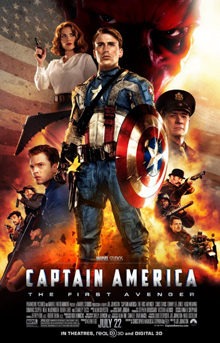
I have to admit, I wasn't expecting much from Marvel's latest blockbuster. For starters, I know absolutely nothing about the character (only that he was introduced to American audiences during the Second World War in an attempt to boost public morale). I also believed that Captain America: The First Avenger would act as one long trailer for the much anticipated Avengers film, arriving next summer (in the same vein as Iron Man 2). How wrong I was. True, there's nothing deep about Captain America; it embraces its patriotic roots and plays off its propaganda beginnings. There's no self doubt or inner demons plaguing our hero here. For once, it's all about the fun and Captain America excels in it. It's no Dark Knight but it certainly outshines 2011's other super hero flicks: Thor and X-Men: First Class, both of which I thought were brilliant. 

The First Avenger follows Steve Rogers, a boy desperate to join the army and help fight for his country in the Second World War. He is soon transformed into a super soldier, becoming Captain America, supporting troops oversees before he himself is plunged into the midst of battle, attempting to stop Red Skull, Hitler's head of weaponry, from using a tesseract energy source for world domination. Yes, the plot is preposterous, but it really doesn't matter. Captain America was created to promote America, and that's exactly what the movie adaptation does. In fact, I don't think I've ever seen so many stars and stripes in one film.

I believe Thor and Captain America work because of their uniqueness. They break the mould, if you will, of the generic super hero movie that we are all now accustomed to. Iron Man, Spider Man, even The Dark Knight to some degree, (although in no way am I criticising the latter) all take place in a city location. Frankly, it's beginning to get tiresome. The majority of Thor, however, takes place in the mythical world of Asgard, while Captain America takes place on the front line of World War II. It's a refreshing take on something that's been done thousands of times before. On that note, director Joe Johnston has done a terrific job of mirroring the streets of forties New York. This could, in all honesty, be your typical war drama. 

Chris Evans, after his disappointing, if not disastrous turn as the Human Torch in Fantastic Four, is perfect for the role of Captain America. I suppose, in hindsight, it was Evans who encouraged my reluctance to see the film in the first place. After all, it would be so easy to turn Cap into the cheesy, gimmicky joker that Evans played in one of Marvel's worst film franchises. There's no need to fear. The action is fun, but there are moments of seriousness that allows Evans to actually act. The Human Torch, truthfully, was a very two dimensional character. Surprisingly, Captain America is one hero who doesn't mind killing people; this is war after all. (One particular scene with a propeller comes to mind. Nasty.) Hugo Weaving as Red Skull brings nothing particularly interesting to the role. He does, at times, embrace the awful cliches that seem to epitomise Hollywood's portrayal of evil. It's a shame, but the film's positives outweigh these minor criticisms. Even the film's supporting cast, Stanley Tucci as Abraham Erskine, for instance, is brilliant. Credit must also go to Hayley Atwell as love interest, Peggy Carter, a Brit who holds her own amongst the film's strong, American cast.

It'll be interesting to study Cap's character arch in The Avengers. After all, his transition into the present could surely be a premise for a whole other sequel. It's almost a shame that Evans has to sacrifice his screen time in order to make way for the others. Maybe Captain America 2 before The Avengers would have made more sense. I will, however, reserve complete judgement on this until I see The Avengers. 
 
‘A weak man knows the value of strength and compassion,’ Tucci mutters to Evans during the course of the film. This is very much the theme of the movie. Captain America: The First Avenger won't win any major awards, but it will entertain the child inside of you, and, if you can stomach Alan Silvestri's overwhelming, patriotic soundtrack, you may leave the cinema feeling very satisfied indeed. Remember to stick around for a post-credits trailer for The Avengers. 
 
"You know what?" I said to my friend, who attended the same screening. "I'm no comic book nerd, but that just got me very excited." Congratulations Marvel. You've set everything up for The Avengers very nicely. Very nicely indeed.
 
My Rating: * * * *

Wednesday, 20 July 2011

It All Ends...

THIS REVIEW CONTAINS MINOR SPOILERS

'It All Ends...' This is the tagline that has dominated the majority of billboards across the UK and the rest of the world. The moment has arrived. Harry Potter and the Deathly Hallows: Part 2 is here, and it really is the end. What a way to finish the series that has enchanted both children and adults alike.
Director David Yates has done a fantastic job bringing the series into maturity. Part 2 is relentless in its portrayal of death, sacrifice and revenge. The final four films belong in a completely different league to their predecessors. Yates has really delved into the source material, made it his own and presented a brutal finale to author J.K Rowling's legion of fans who will no doubt scrutinise every second of film. The split in Rowling's final book has allowed room for much more detail in the final two films. Whilst Part 1 was very much a 'road movie,' Part 2 is dominated by the final battle that Yates would obviously have to relegate to a ten minute slot had Deathly Hallows been a one, 120 minute film. As such, the film picks up directly after Voldemort finds the Elder wand. After a thrilling break into Gringott's bank, Part 2 is very much centred around Hogwarts and its fate. There is no real beginning, middle and end. We must remember that this is only half of the story.
Yates plays with our knowledge of history. Part 1, I always thought, mirrored the persecution of the Jews during the Holocaust, the Ministry of Magic adopting Nazi-esque tendencies in their pursuit of muggle-born wizards. Part 2, in its portrayal of the destruction of Hogwarts School of Witchcraft and Wizardry is blatantly inspired by the images of 9/11 that are so deeply ingrained in our memories. This is, if you will pardon the cliché that now accompanies every Potter film, the 'darkest' of the lot.
Daniel Radcliffe, Rupert Grint and Emma Watson have improved with each film and Part 2 is no different. Radcliffe proves himself as a leading man in what is essentially an action film and with support from Grint and Watson, the trio ensure that the series goes out with a bang. It is a testament to the series, surely, that many of Britain's best return for what can only be described as less than a cameo appearance. Jim Broadbent (Slughorn) and Emma Thompson (Trelawney) have a total screen time of three to four seconds. However, it is Alan Rickman as the deliciously ambiguous Professor Snape that steals the show. Receiving the emotional pay off that fans have yearned for since the series began, Rickman makes the most of his moment in the limelight and rightly so. His final scene is brilliantly emotional, a small moment that stands out amongst the chaos of the final battle. These scenes, where Yates strips the theatrics to raw human emotion, is where Part 2 really excels.
There is no need to comment on the special effects. They are, as one would come to expect from a series of this calibre, of the highest standard. Yates ensures this visual feast does not cloud the characterisation that he has spent time carefully crafting since the fifth film.
The music, by Alexandre Desplat, simmers with tension. For once, 'Hedwig's Theme' is not overused and the final 'Nineteen Years Later' epilogue is accompanied by the rousing and climactic orchestral that ended the first film, a welcome look back that makes us aware of just how far this series has come.
I cannot comment on the 3D. I purposely went to see Harry Potter in 2D. I, for one, believe that 3D adds nothing to the overall experience (apart from the higher ticket price). Unlikely to entice new followers, Harry Potter and the Deathly Hallows: Part 2 will certainly please those who have grown up with the franchise and the characters themselves. A rollercoaster of a film, Yates has driven Harry Potter to a fitting finale. While it may gloss over the mythology of this magical world, Part 2 is a stunning end to the most successful series in cinema.

My Rating: * * * *